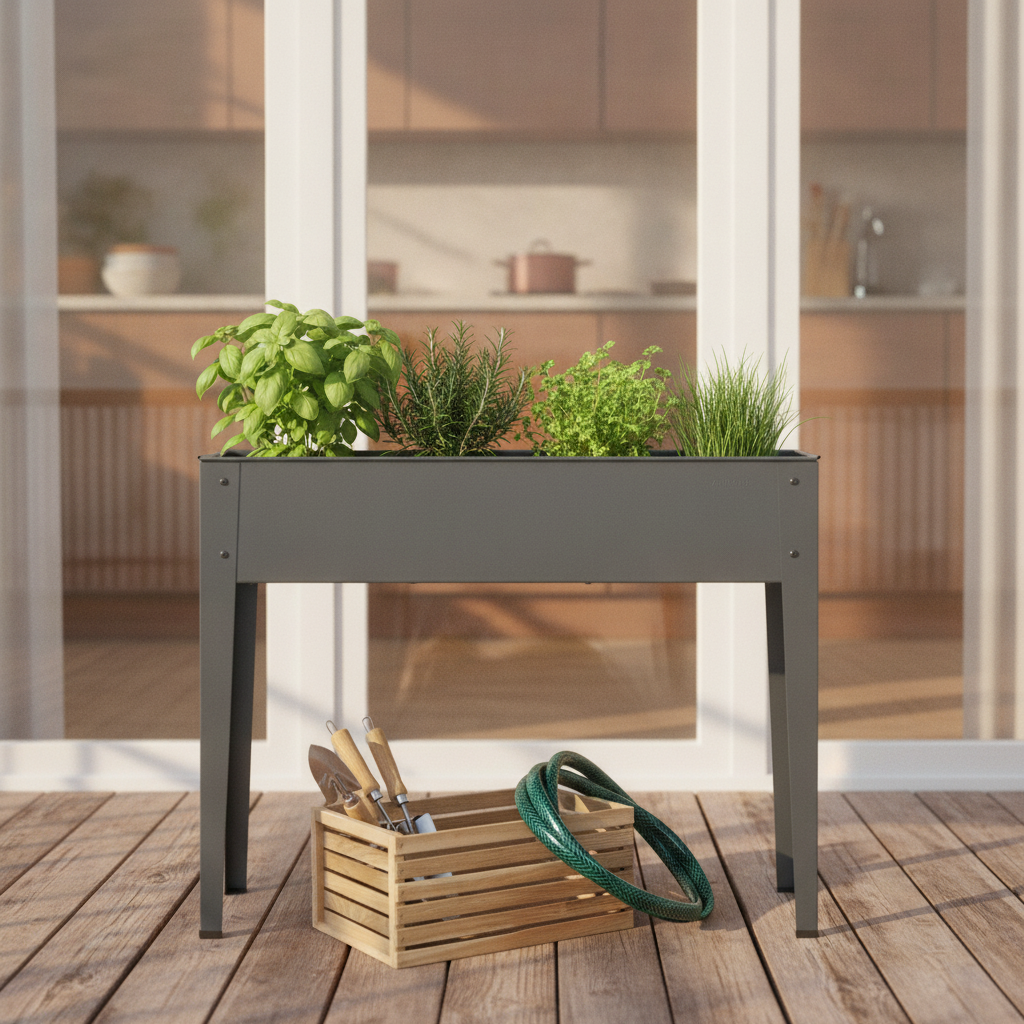
 AI-generated
Raised Bed Buying Guide: Metal or Wood – Top Models for Garden and Balcony
Metal or wood? We compare six of the most sought-after raised beds for garden and balcony – with clear guidance by location, height, and material properties.
Reviewed on June 17, 2026Curated by Sascha Camin
 AI-generated
As an Amazon Associate I earn from qualifying purchases.
At a glance
Our verdict
For most gardeners, a metal raised bed is the lower-maintenance long-term solution – the UDPATIO with 970 liters and 90 cm height offers the strongest combination of capacity and ergonomics. Those gardening on the balcony who prefer a wood aesthetic will find the best overall package in the mgc24 pine wood bed (78 cm height, storage shelf). For narrow balconies and railings, there is barely a better alternative to the Arebos metal bed at 26 cm wide.
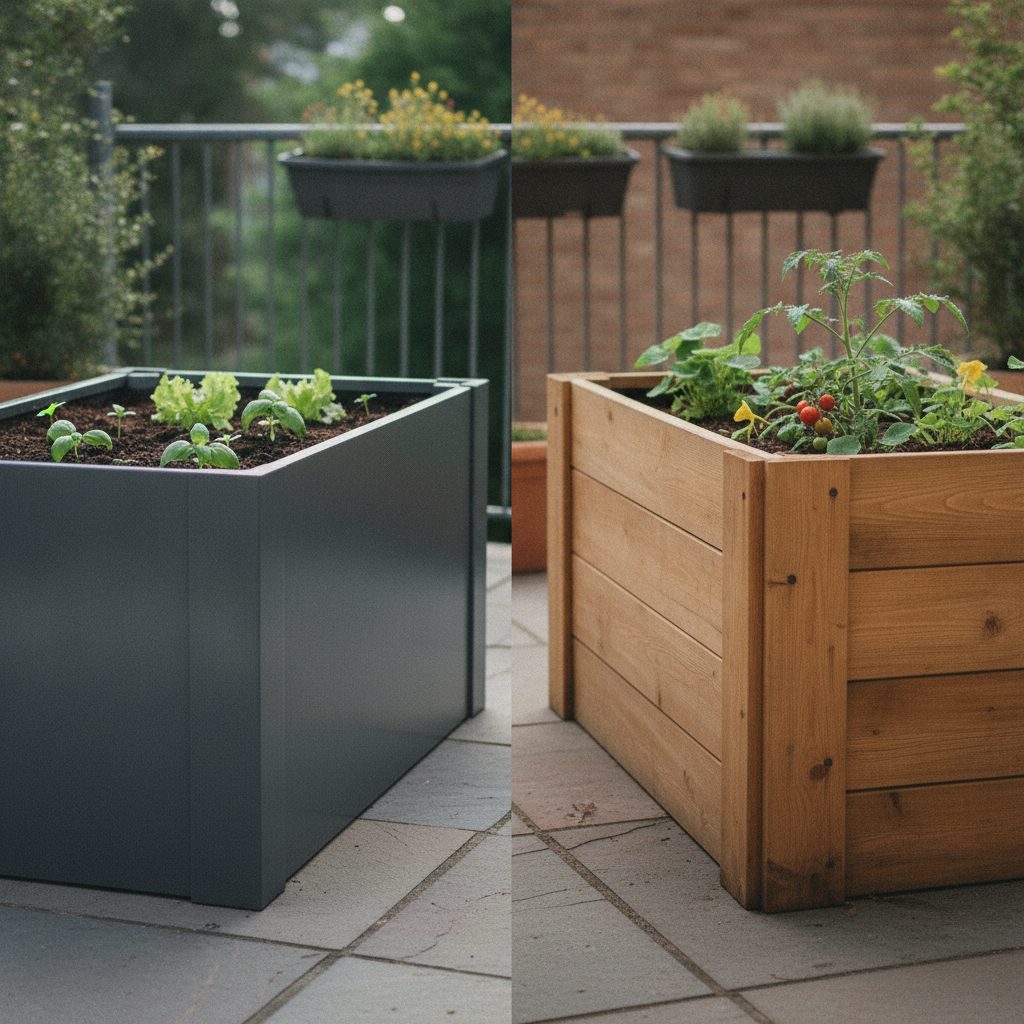
The choice of the right raised bed begins with a question that quickly becomes puzzling: metal or wood? Both materials have genuine strengths – and genuine weaknesses. Wood feels natural and warm, fits harmoniously into almost any garden context, and keeps soil temperature more stable. Metal, on the other hand, is often more durable, lower-maintenance, and available in significantly larger dimensions.
On the balcony, additional criteria come into play: space requirements, weight, and drainage suddenly matter far more than in the garden. Someone wanting to position a slim metal bed along a balcony railing has very different requirements from someone looking for a sprawling XXL bed for a vegetable garden.
In this comparison, we look closely at six concrete models – from the 26 cm slim balcony solution to the 320 cm corrugated iron bed for the garden. We show which model genuinely fits which purpose and answer the material question with an eye on durability, ergonomics, and location.
Step 1 · Comparison
Compared
| Attribute | Arebos Raised Bed Balcony |  Ohuhu Metal Raised Garden Bed Ohuhu Metal Raised Garden Bed | 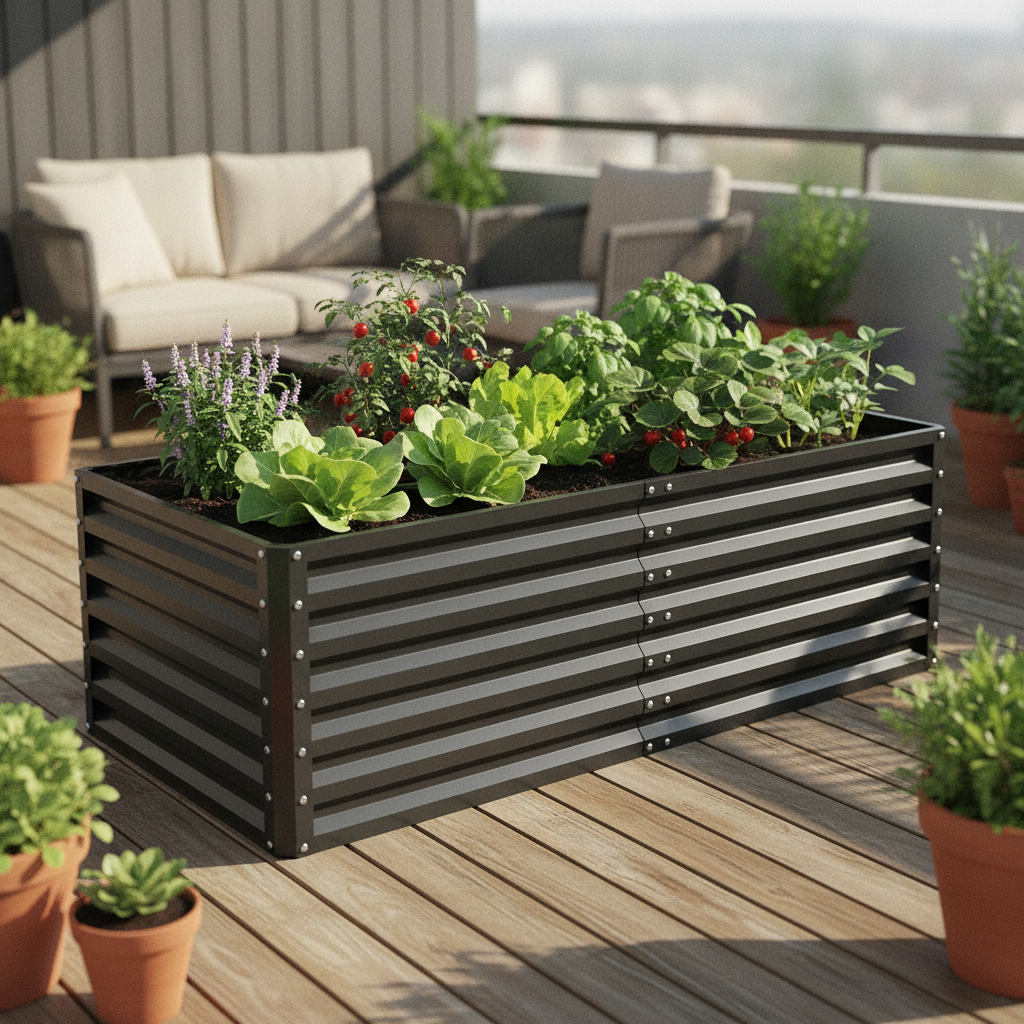 UDPATIO Metal Raised Garden Bed UDPATIO Metal Raised Garden Bed | 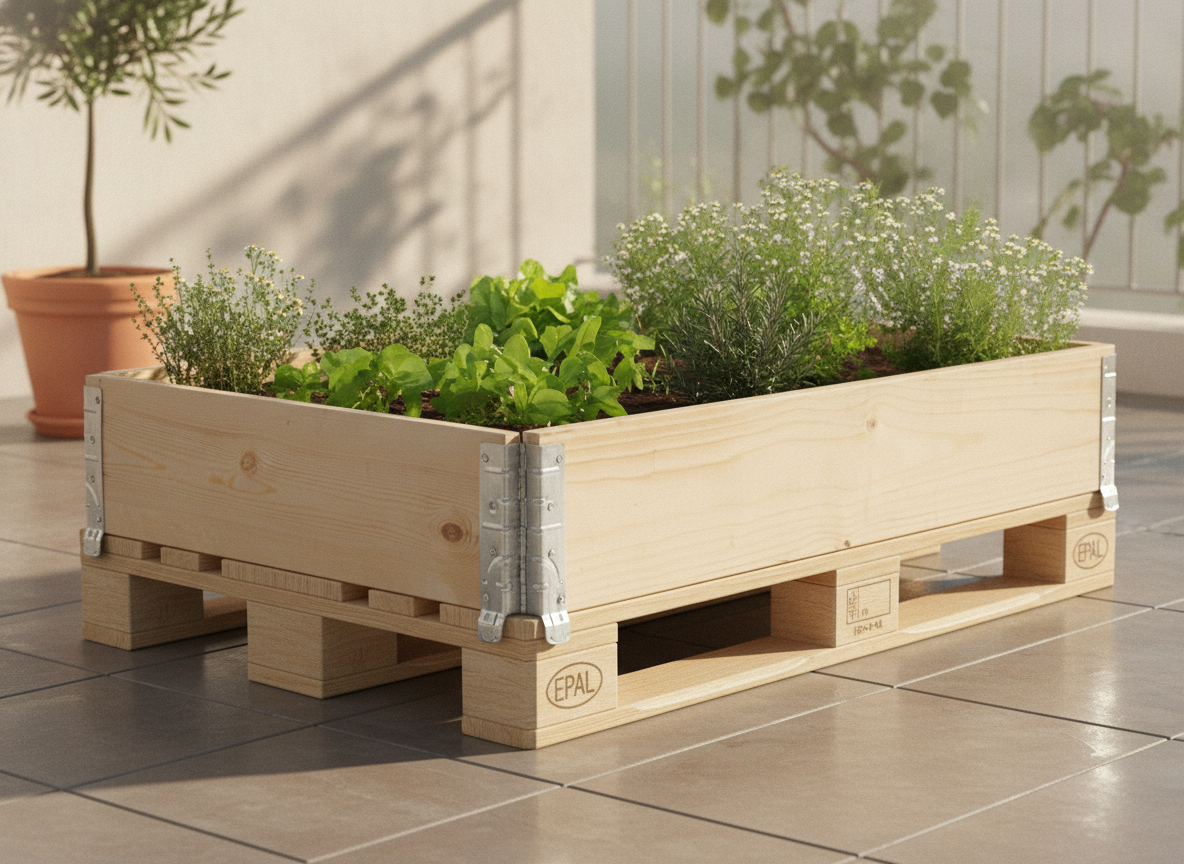 gardivo Wooden Raised Bed Frame gardivo Wooden Raised Bed Frame | 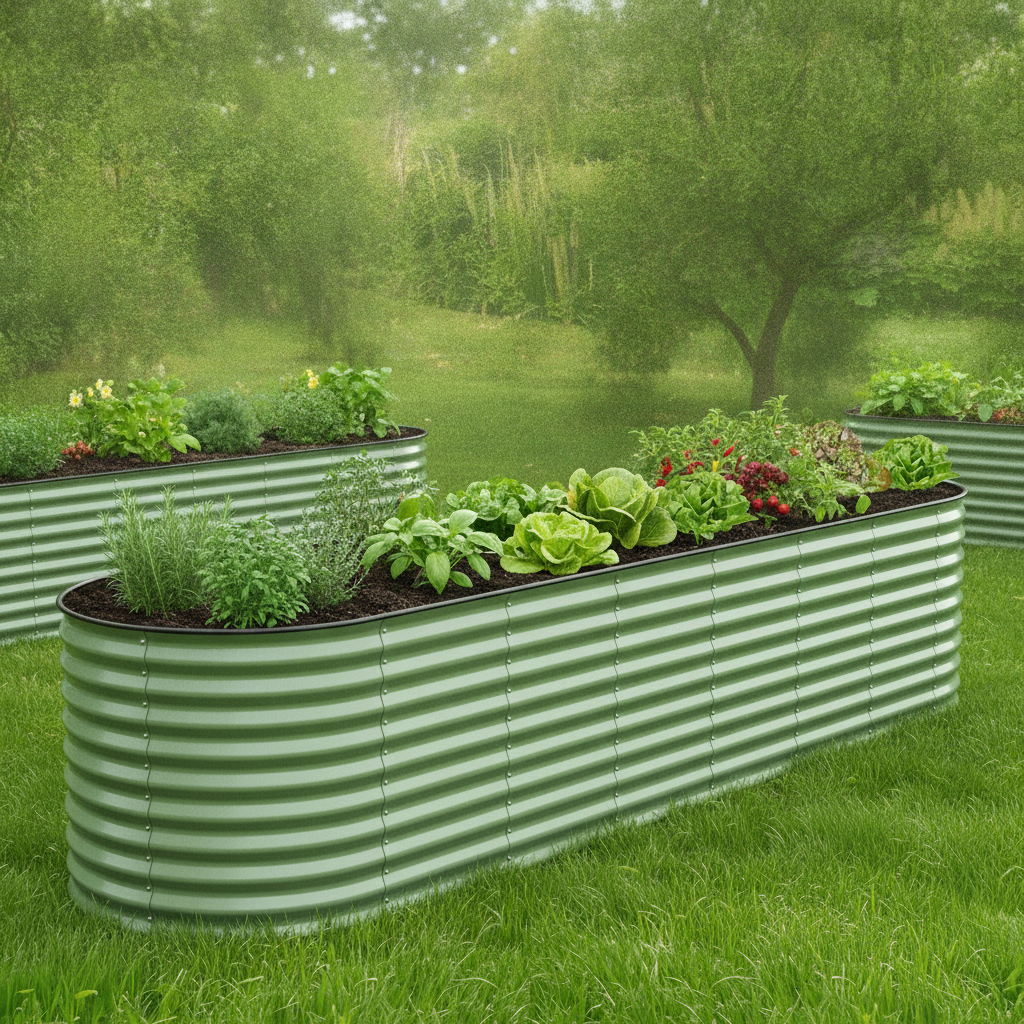 TTL Garden Nature XL Raised Bed TTL Garden Nature XL Raised Bed | 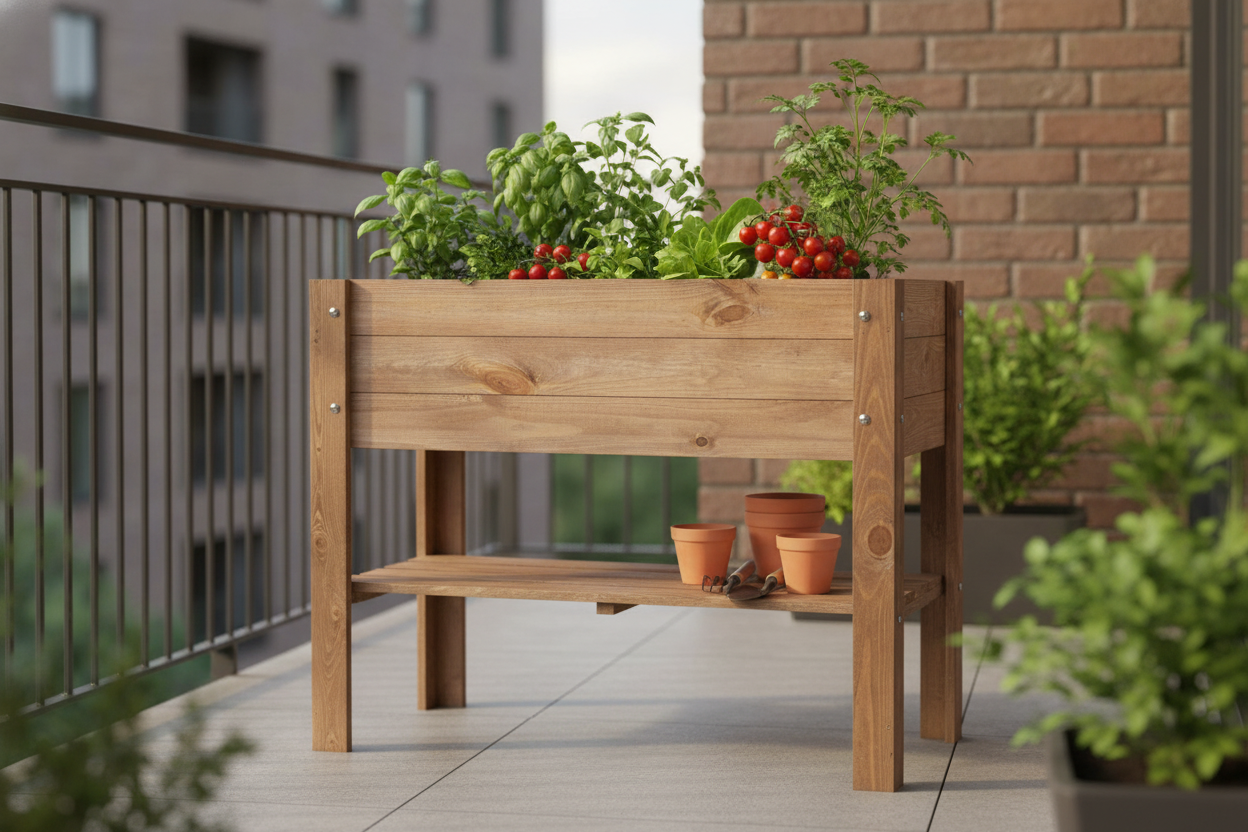 mgc24 Pine Wood Raised Garden Bed mgc24 Pine Wood Raised Garden Bed |
|---|---|---|---|---|---|---|
| Material | Metal | Galvanized steel | Zinc-aluminum | Wood (pallet frame) | Corrugated steel, galvanized | Pine wood (sustainable) |
| Dimensions (L×W×H) | 101.5 × 26 × 80 cm | 180 × 90 × 60 cm | 180 × 60 × 90 cm | 120 × 80 × 20 cm | 320 × 80 × 80 cm | 80 × 37.6 × 78 cm |
| Capacity | Slim / compact | approx. 0.97 m³ | 970 liters | Low, stackable | Very large (XL) | approx. 63 liters |
| Ideal for | Balcony, railing, terrace | Garden, open space | Garden, balcony | Garden, on Euro pallet | Garden, large open area | Balcony, terrace, garden |
| Special feature | Only 26 cm wide, drainage holes | Corner protection, rust-free coating | 3 support bars, open base | Modular, stackable, plug-in | 9 braces, sage green lacquer | Storage shelf, fleece included |
On mobile, swipe sideways to see all columns.
Step 2 · Decision
Which one fits you?
If Narrow balcony or railing
Our pickView on AmazonArebos Raised Bed BalconyResearchedAt 26 cm wide, the Arebos bed fits where other models simply cannot stand. The integrated drainage holes solve the waterlogging problem on balconies without additional measures.
If Large garden, growing deep-rooting vegetables
Our pickView on AmazonUDPATIO Metal Raised Garden BedResearched970-liter volume, 90 cm height, and corrosion-resistant zinc-aluminum make the UDPATIO the most capable combination of capacity and ergonomics in the comparison.
If Wood aesthetic on terrace or balcony, back-friendly gardening
Our pickView on Amazonmgc24 Pine Wood Raised Garden BedResearchedThe mgc24 pine wood bed combines 78 cm working height, natural aesthetics, and an integrated storage shelf – the best overall package for those who prefer wood and want to garden comfortably while standing.
If Very large garden project with aesthetic ambitions
Our pickView on AmazonTTL Garden Nature XL Raised BedResearchedAt 320 cm long and with the distinctive corrugated iron look in sage green, the TTL Garden Nature XL is the choice for those looking for a genuine statement bed with the garden space to match.
Section 1
How We Selected These Models
For this comparison, we researched raised beds from both material categories and focused on four core criteria: location suitability (balcony vs. garden), material build quality, capacity, and buyer feedback on Amazon. Only models with a meaningful number of buyer reviews and consistently positive feedback made the shortlist.
Particular attention was paid to the precise material specification: galvanized steel, zinc-aluminum, and corrugated iron differ in corrosion resistance and durability – details often glossed over in comparisons. We also assessed the practical usability of the working height: a bed with 60 cm height is not a fully functional standing bed and is categorized accordingly in this comparison.
Section 2
What Matters When Buying a Raised Bed
Material and durability: Metal raised beds are generally the lower-maintenance long-term option. Galvanized steel (Ohuhu, TTL GARDEN) and zinc-aluminum (UDPATIO) survive multiple seasons without significant effort. Wood (pine in the mgc24) looks more natural and moderates soil temperature better, but requires a protective fleece lining on the inner walls.
Height and ergonomics: Raised beds serve not only for growing but also for back protection. Those wanting to garden while standing without knee pain should plan for at least 75 cm working height. The UDPATIO (90 cm) and the mgc24 (78 cm) are the most ergonomic options. 60 cm – as with the Ohuhu – is a compromise that suffices for deep-rooting plants but doesn't enable truly comfortable standing work.
Location and space requirements: Balconies impose special requirements: small width (the Arebos at 26 cm is the specialist), good drainage, and a manageable weight. In the garden without space constraints, width is less relevant; volume and stability under soil load take priority.
Volume for cultivation: Deep-rooting plants like potatoes, carrots, or parsnips need at least 50–60 cm depth. Herbs, lettuce, and strawberries thrive in shallower beds from 20 cm. The gardivo frame at 20 cm build height is not suitable for deep-rooting plants without additional stacking.
Section 3
The Picks Compared – Strengths and Limitations
The six models can be roughly divided into three categories: balcony specialists, garden all-rounders, and niche products.
Balcony specialists: The Arebos (metal, 26 cm wide) is the most direct solution for balconies with limited width. The mgc24 (pine wood, 78 cm high) is the alternative for those who prioritize natural aesthetics and ergonomics and have a little more depth on the terrace.
Garden all-rounders: The UDPATIO (zinc-aluminum, 970 liters, 90 cm high) is the strongest combination of volume, height, and material quality – ideal for ambitious growers who want to work in a back-friendly manner. The Ohuhu (galvanized steel, approx. 0.97 m³) offers similar capacity at a somewhat lower height. The TTL Garden Nature XL (corrugated iron, 320 cm) is the choice for genuinely large projects with aesthetic ambitions.
Niche product: The gardivo wood frame (120 × 80 × 20 cm) targets gardeners who already have Euro pallets and are looking for a modular, expandable system. As a standalone raised bed – without a pallet as a base – its usefulness is limited.
Section 4
Verdict: Metal or Wood?
The question of metal or wood cannot be answered categorically – it depends on location and personal priorities. Those thinking long-term and wanting to minimize maintenance are better served by metal: galvanized steel and zinc-aluminum survive multiple seasons without requiring special attention. Those who prefer a natural aesthetic, garden on a balcony or terrace, and value wood as a material will find the most coherent overall package in the mgc24 pine wood bed.
Importantly, the material debate shouldn't be overvalued. Height, location, and volume are more decisive than the material itself. A 90 cm metal bed is more valuable for your back than a 60 cm wooden bed – regardless of which material looks more natural.
FAQ
Our picks
All picks at a glance — key facts and a direct link.