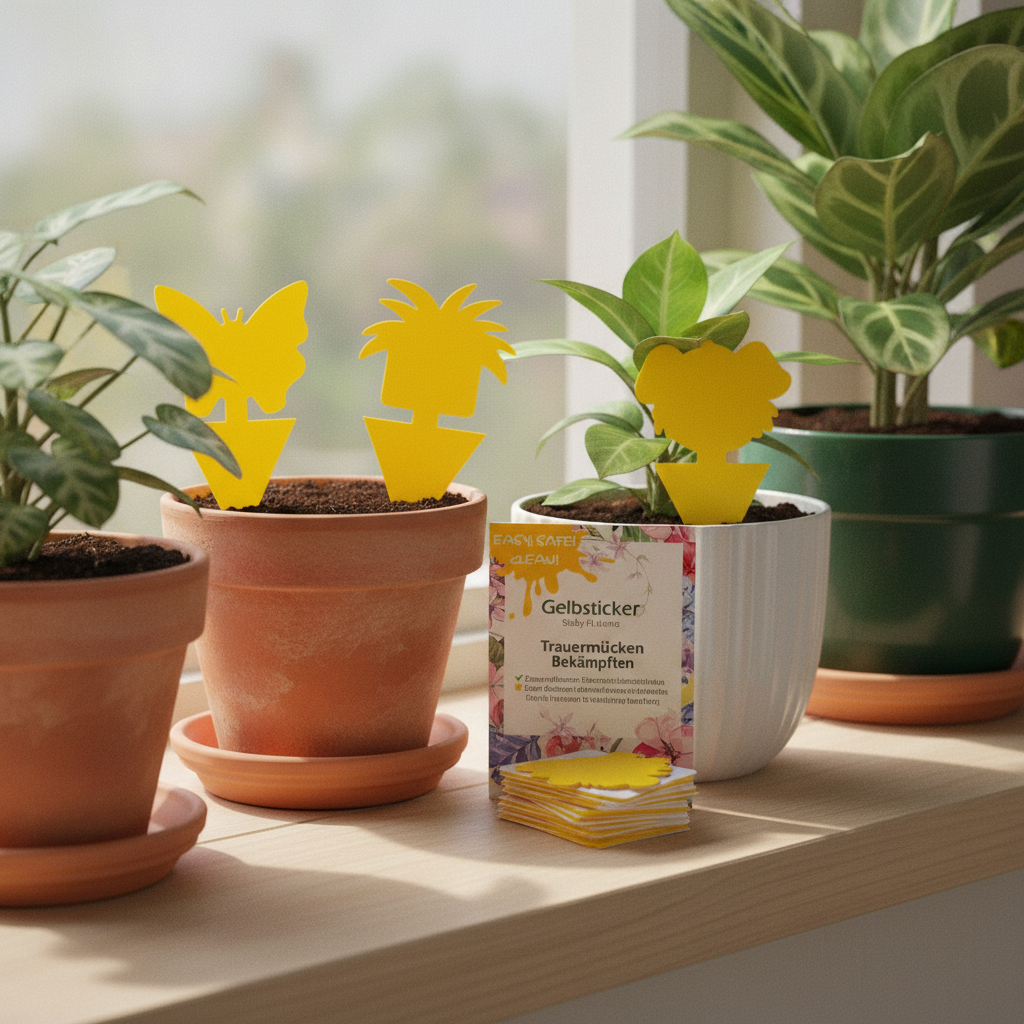
 AI-generated
Fighting Fungus Gnats: Yellow Sticky Traps vs Nematodes – What Actually Works
Fungus gnats are a persistent nuisance – but not every method tackles the problem at its root. This guide explains whether yellow sticky traps or nematodes better suit your situation, and why combining both approaches is often the smartest choice.
Reviewed on June 10, 2026Curated by Sascha Camin
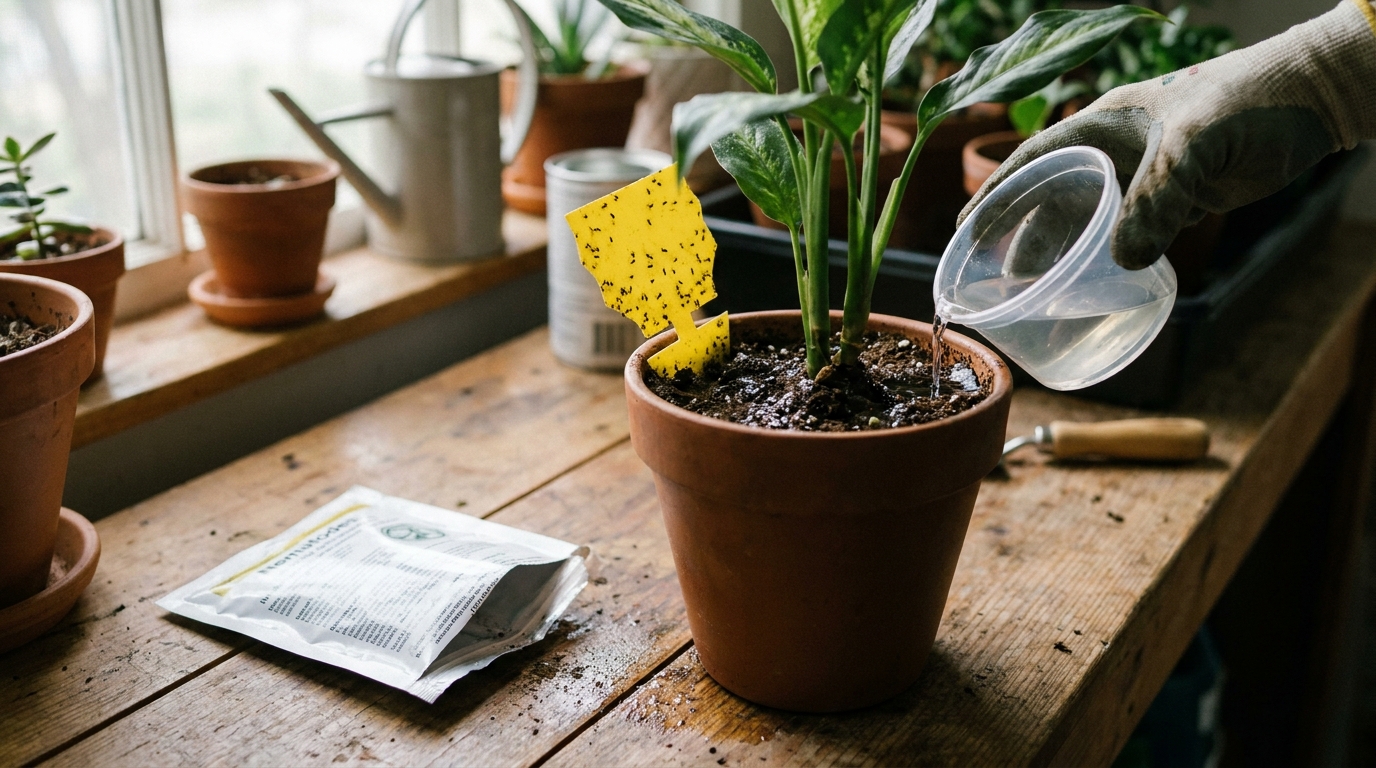 AI-generated
As an Amazon Associate I earn from qualifying purchases.
At a glance
Our verdict
Anyone who genuinely wants to get fungus gnats under control needs both fronts covered: yellow sticky traps for the flying adults, nematodes for the larvae in the soil. For a fresh initial infestation, the Blooven yellow traps are the most straightforward starting point. Those facing a recurring or serious problem will likely need the nemabest® SF Nematodes – and ideally deploy both methods in parallel to break the cycle completely.
Anyone keeping houseplants knows the sight: small black flies rising from the soil when watering, persistently hovering through the room. What many underestimate – the adult insects are the visible, but not the actual problem. It's the larvae in the soil that feed on roots and organic matter and can cause serious damage to seedlings and young plants.
The market offers two well-documented, chemical-free countermeasures. Yellow sticky traps like those from Blooven attract flying adults and catch them on an adhesive surface – effective immediately, no preparation required. Nematodes like nemabest® SF go deeper: as living microorganisms, they are applied to the soil with watering water and specifically target larvae and pupae there.
Which method suits which situation depends on infestation severity, number of pots, and personal circumstances. This guide maps the options clearly.
Step 2 · Decision
Which one fits you?
If First infestation, quick visible results desired
Our pickView on AmazonBlooven Yellow Sticky TrapsResearchedYellow sticky traps are immediately ready to use, catch adults within hours, and directly show whether the infestation is declining. No effort, no refrigeration, no minimum temperature window.
If Fungus gnats keep returning despite countermeasures
Our pickView on Amazon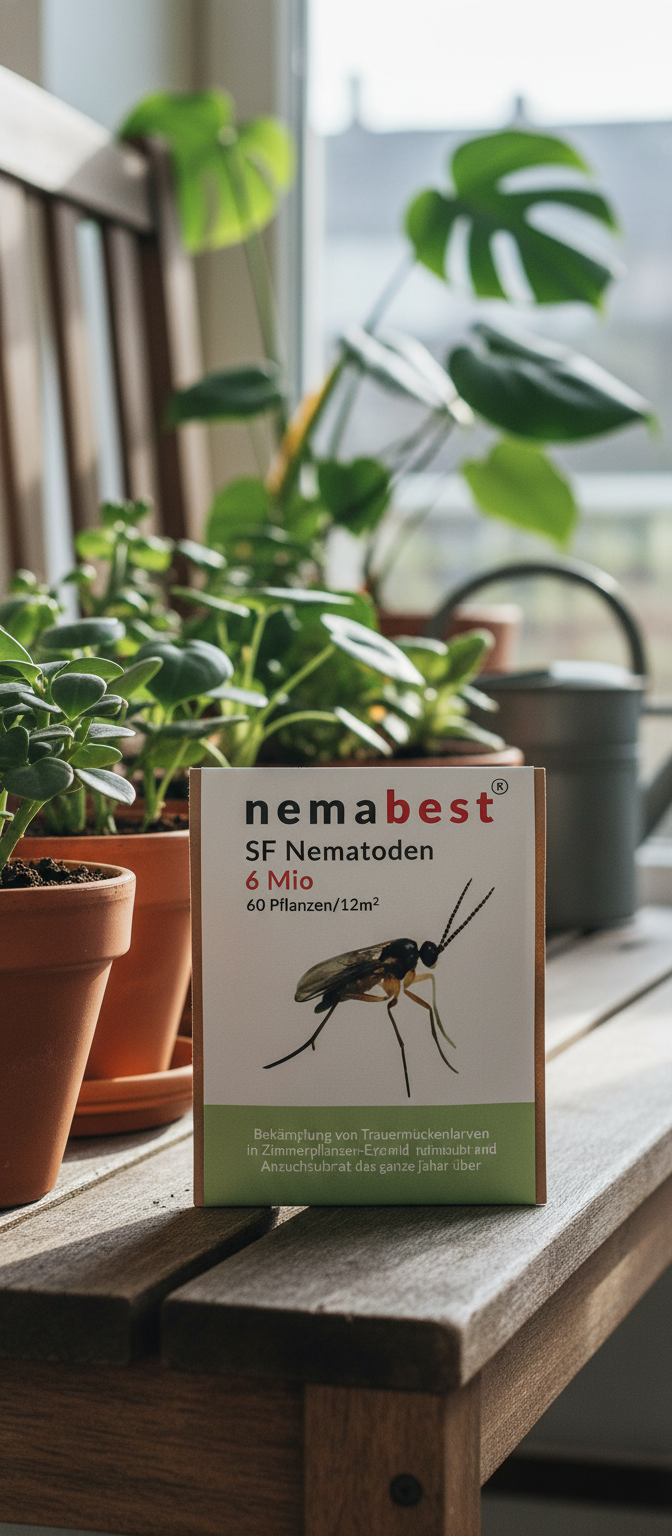 nemabest SF Nematodes Fungus GnatsResearched
Recurring infestation indicates an established larval population in the soil. Nematodes are the only method that directly tackles this invisible source – yellow traps alone cannot reach it.
If Many pots or a conservatory, planning lasting prevention
Our pickView on Amazonnemabest SF Nematodes Fungus GnatsResearched6 million nematodes cover approximately 60 pots – ideal for larger collections. Combined with yellow traps as a permanent catch-trap, this creates a complete control system.
Section 1
How We Selected These Products
The core criterion was: chemical-free effectiveness documented by a broad buyer community. Both featured products are biological, safe for indoor use, and have an unusually wide review base – the Blooven yellow traps with a very broad review base, the nemabest® SF nematodes with an equally broad, consistently positive review base. These are not niche products but long-tested solutions with proven everyday effectiveness.
Also decisive was that both methods address different phases of the fungus gnat life cycle. A guide that covers only one method solves the problem only halfway – which is why two complementary approaches deliberately stand side by side here.
Section 2
The Key Use Cases
Fresh isolated infestation: A recently purchased plant brings the first fungus gnats. Yellow sticky traps immediately reduce the adults and prevent spread to neighboring pots. The traps simultaneously indicate whether the infestation really remains confined to this plant.
Recurring problem despite letting soil dry: Anyone who regularly lets the soil dry out and still keeps seeing gnats has an established larval population in the substrate. This is the classic use case for nematodes – they target exactly where yellow traps structurally cannot reach.
Larger plant collection or conservatory: Here a systematic, area-wide treatment makes sense. Nematodes can be evenly distributed with the watering water and work in every treated pot. Supplementary yellow traps then serve as a monitoring instrument to confirm treatment success.
Section 3
Which Product for Which Situation
The choice between yellow sticky traps and nematodes is not a quality question but a scenario question.
Yellow sticky traps fit when: the infestation is new and still limited; immediate results without preparation are needed; a simple monitoring tool is sought; or you want to support an ongoing nematode treatment.
Nematodes fit when: the infestation recurs repeatedly despite countermeasures; a larger number of pots need to be treated simultaneously; soil temperature is reliably above 8°C; and you are prepared to use the living product promptly and store it refrigerated.
In many cases, the smartest decision is the combination: insert yellow traps immediately, follow up with nematodes.
Section 4
Conclusion: Breaking the Cycle on Both Levels
Fighting fungus gnats means consistently interrupting their life cycle – not just addressing what's visible. Yellow sticky traps deliver immediate surface-level results and serve as a permanent early-warning system. Nematodes solve the problem at its root. Anyone combining both methods has the most complete and sustainable answer to a frequently underestimated everyday problem.
FAQ
Our picks
All picks at a glance — key facts and a direct link.
AI-generatedAI-generated