As an Amazon Associate I earn from qualifying purchases.
AI Regulation in the EU – Practical Guide
Regulierung von Künstlicher Intelligenz in der EU: Praxisbezogene Lösungsansätze für die Sicherheit von KI-Anwendungen (Vertrauenswürdige KI)
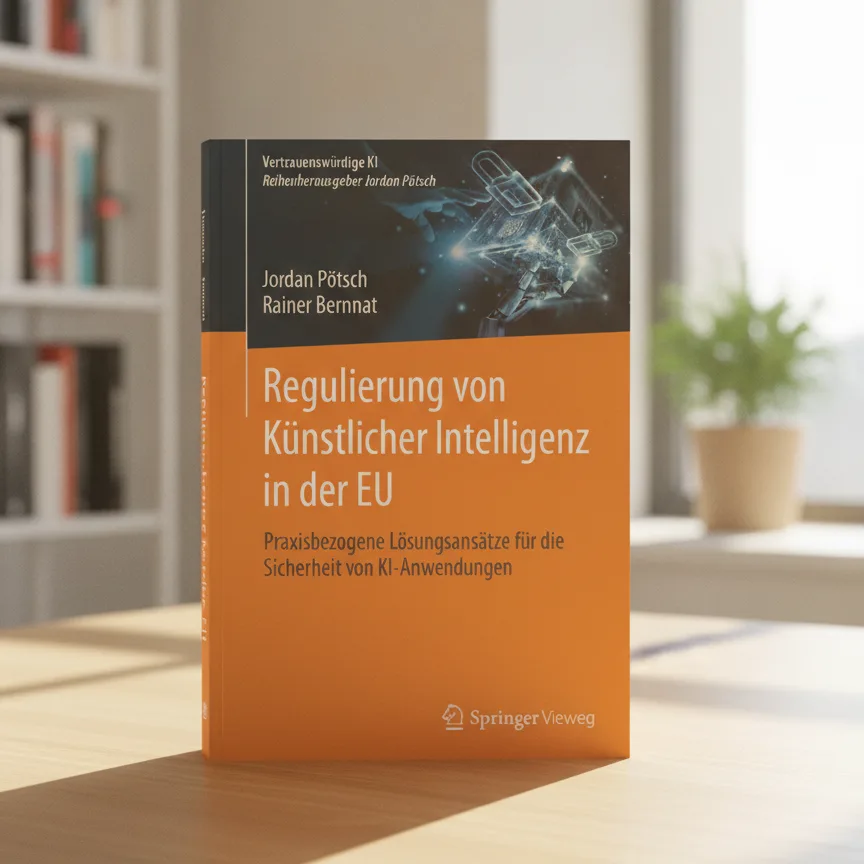 AI-generated
 Product photo
First image is an AI staging by primlio · remaining images from the manufacturer
In detail
Anyone building, deploying, or introducing AI systems today runs into the same question: how do you reconcile innovation with Europe's new rules for artificial intelligence? That's exactly where this book from the "Trustworthy AI" series comes in. Rather than getting lost in abstract legal debates, it takes a clearly practice-oriented approach: it translates the requirements of EU AI regulation — the AI Act above all — into concrete, actionable solutions for companies, developers, and anyone responsible for designing AI systems that are safe and compliant. The throughline is the safety of AI applications: how are risk classes assessed, what documentation and transparency obligations arise, and how can trustworthiness be not just claimed but demonstrated technically and organizationally? The book is aimed at readers who don't want to stop at theory but are looking for concrete steps — from risk assessment through governance structures to technical safeguards. What stands out is its focus on the intersection of law and practice: legal requirements aren't just explained, they're translated into processes and decision aids that can be built into real projects. That makes the book a reference work for anyone carrying responsibility for AI projects — whether in product development, compliance, or IT security. As part of the "Trustworthy AI" series, this title fits into a broader conversation about how technology can be shaped responsibly for society. For readers interested in technology & politics nonfiction, this is a work that treats the regulatory framework not as a burden but as a design task. Because European AI legislation will keep evolving in the coming years, the book's strength lies in its focus on principles and ways of thinking rather than paragraph-by-paragraph detail — an approach that outlasts short-term legal amendments. For anyone who wants to not just use AI but help shape it responsibly, this title is a worthwhile entry point into a topic gaining relevance across every industry.
Pros & cons
What speaks for it
- Translates abstract EU requirements like the AI Act into concrete action steps
- Practice-oriented focus on safety and trustworthiness of AI systems
- Works as a reference for compliance, product, and IT teams
- Connects legal requirements with organizational and technical measures
- Part of a series offering thematic depth on trustworthy AI
What to consider
- Since EU AI regulation keeps evolving, detailed rules should still be checked against current law
- Assumes a basic understanding of AI systems and regulatory processes
Frequently asked
Use cases
- Compliance teams checking existing AI systems in their organization for EU conformity
- Product owners who want to factor safety requirements into new AI applications early in development
- Decision-makers looking for a practical entry point into European AI regulation
Sharp minds explain how technology is reshaping society and politics — well-researched, never dry.